

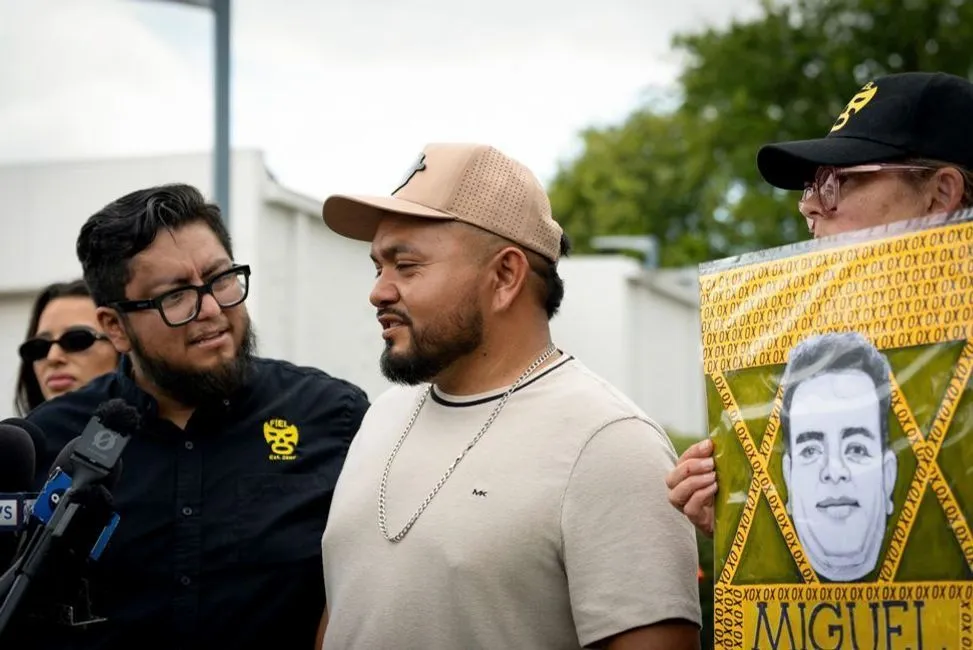
A legal battle is brewing in Houston after a U.S. Immigration and Customs Enforcement officer allegedly used a vehicle as a weapon against a man during an enforcement operation last Saturday. Harris County District Attorney Sean Teare stated that surveillance footage suggests the officer intentionally drove into Miguel Parra Hernandez, leaving the forty eight year old man with a severely broken leg. Teare noted that the evidence currently points toward a potential charge of aggravated assault with a deadly weapon, signaling that his office is taking the incident very seriously.
The details surrounding the crash remain heavily disputed between local officials and federal agents. According to ICE, Parra Hernandez was traveling with the target of their operation and attempted to flee on foot, accidentally running directly in front of an agency vehicle. However, advocates from FIEL Houston and legal representatives for Parra Hernandez argue that the surveillance video tells a different story, showing an SUV pursuing the man closely before he ended up on the ground injured. Family members and lawyers further complicated the agency’s narrative by claiming the primary target mentioned by ICE was not even present in the vehicle at the time of the arrest.
Parra Hernandez, who has lived in the United States for over three decades, remains in ICE custody while receiving medical treatment at a hospital. He has already undergone one surgery below his knee and is awaiting additional reconstructive surgery on his ankle once swelling subsides. His attorney describes a grim situation where he is fighting for his health while remaining detained by the same agency accused of causing his injuries.
This latest confrontation adds to growing tension between Harris County prosecutors and federal immigration authorities in Texas. District Attorney Teare revealed that his office is simultaneously investigating a fatal shooting from July involving another ICE officer, though he claims both ICE and the Department of Homeland Security have failed to cooperate with those inquiries. This lack of transparency has fueled criticism regarding accountability within federal immigration enforcement operations conducted across the region.