
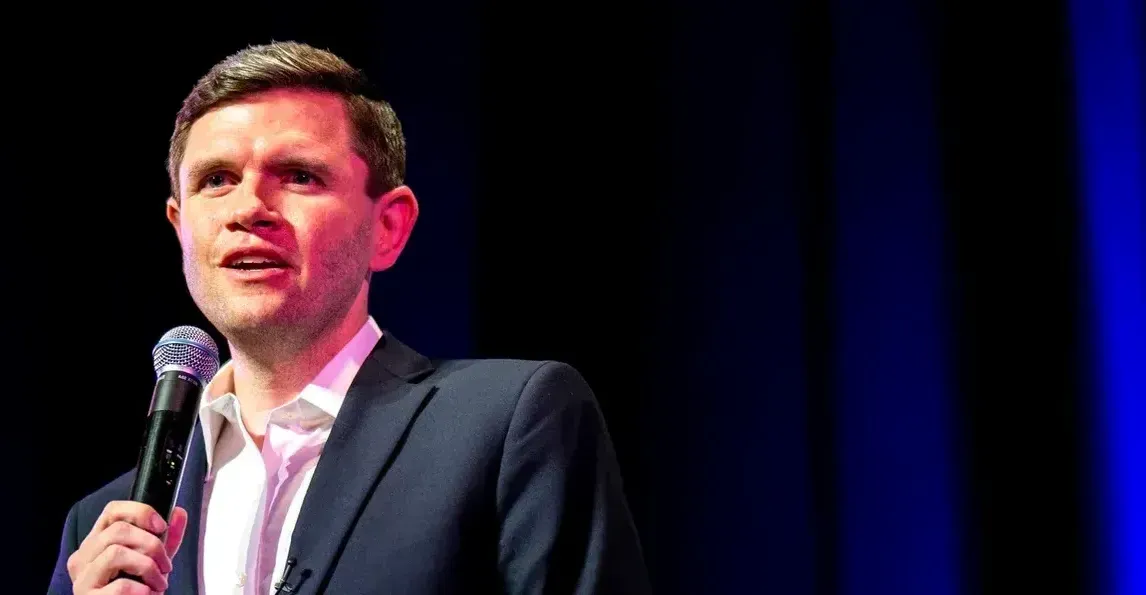
Texas Democratic Senate candidate James Talarico has provided digital proof to counter accusations that he vanished from the campaign trail for mysterious reasons earlier this month. After nearly two weeks away from the public eye, Talarico’s team shared security camera images with CBS News that appear to place the lawmaker at his Austin home throughout the first week of October. These timestamped photos, sourced from a SimpliSafe system in his backyard, align with satellite imagery of his residence and show a man matching Talarico’s description in various outfits across multiple days.
The release follows a period of intense speculation fueled by his Republican opponent, Ken Paxton, and former President Donald Trump. During a rally in San Antonio, Paxton questioned where the candidate had been hidden while Trump mocked Talarico’s diet and health. The vacuum of information led to unfounded social media rumors suggesting Talarico had secretly traveled to Ohio for psychiatric treatment. Those claims were further dampened when the Lindner Center of Hope explicitly stated on social media that the candidate had never received treatment at their facility.
According to Talarico and his spokespeople, the reality was far less dramatic than the internet theories suggested. The candidate maintains he was simply battling a severe case of the flu, which forced him to cancel several high profile appearances between late September and early October. While critics argued that a thirteen day absence was excessive for a common virus, Talarico described himself as being confined to bed and focusing on recovery to avoid infecting others.
Talarico resurfaced publicly on October 9 at the Austin City Limits Music Festival, signaling his return to active campaigning. Following his reappearance, campaign spokesman J.T. Ennis dismissed the theories regarding an Ohio trip as lies intended to promote a pathetic conspiracy theory. For Talarico, who recently returned to a schedule of interviews and concerts, the episode served as what he called a reminder that voters cannot believe everything they read on the internet.