

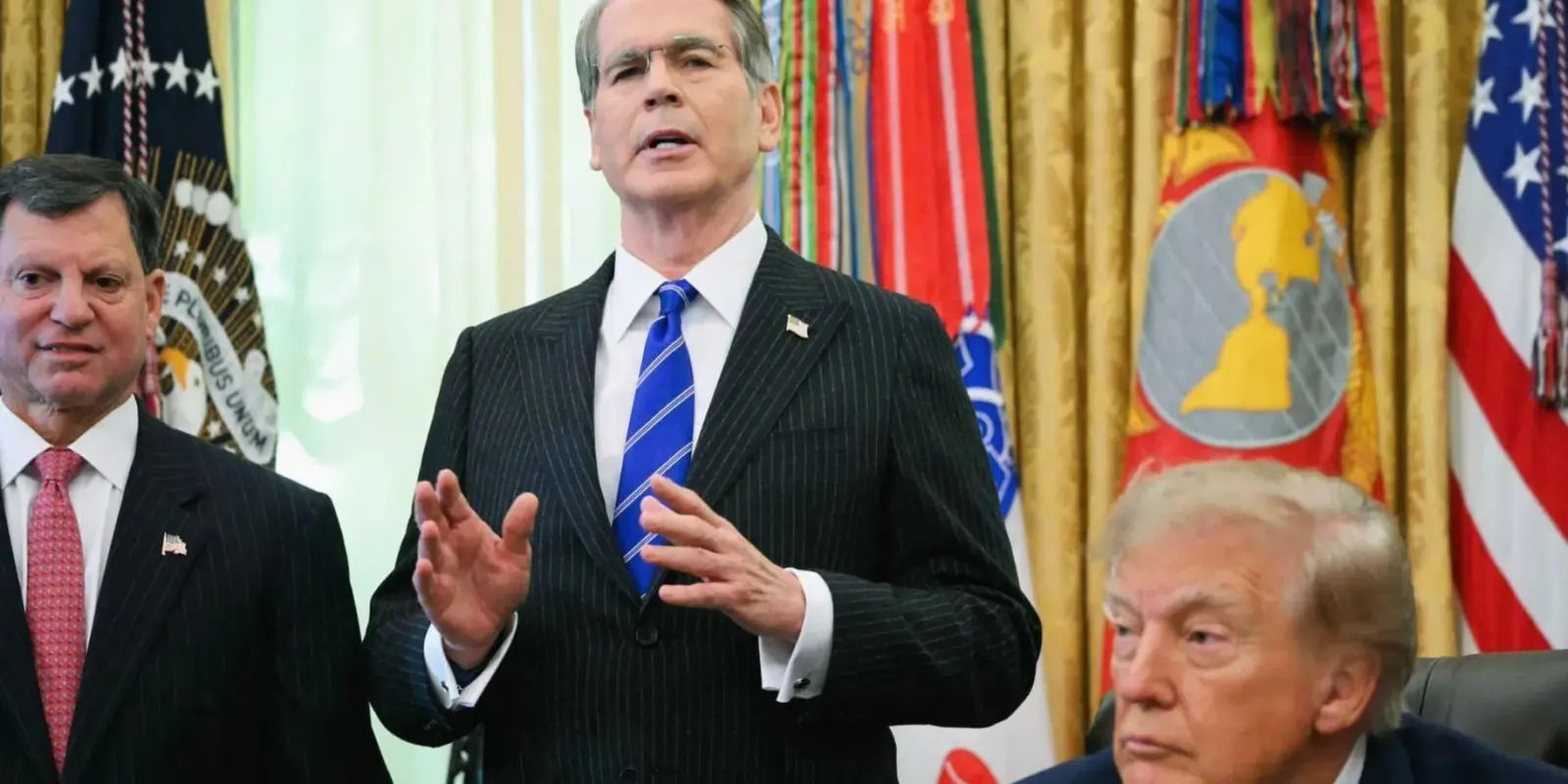
Treasury Secretary Scott Bessent issued a sharp warning to Ukrainian President Volodymyr Zelenskyy on Sunday, urging him to exercise caution when discussing U.S. support for Ukraine. The friction stems from recent reports that Starshield, the government-controlled military version of SpaceX’s Starlink satellite network, has faced restrictions that hindered Ukraine’s response to Russian attacks. During an appearance on Meet the Press, Bessent described Zelenskyy’s assertions that the U.S. government throttled the service as reckless and untrue, noting that both President Donald Trump and Secretary Marco Rubio have categorically denied any involvement in limiting the technology.
The dispute highlights a growing divide between the two allies, especially as Zelenskyy claimed that Ukraine had also been blocked from essential U.S. intelligence for a period of time. While Elon Musk stated on X that the U.S. military and the president are ultimately responsible for any speed limits or usage restrictions on Starshield since they own and control the system, President Trump has dismissed these claims entirely. Trump maintained that there has been no change in service levels, suggesting neither he nor Musk were behind any perceived slowdowns despite separate reporting indicating White House orders may have played a role.
This diplomatic spat arrives amid broader volatility in the U.S.-Ukraine relationship during Trump’s second term. The president has grown increasingly frustrated with Ukrainian strikes on Russian oil refineries, which he argues contribute to rising domestic energy costs just ahead of the midterm elections. Despite evidence that soaring fuel prices are primarily driven by conflicts involving Iran and disruptions in the Strait of Hormuz, Trump has publicly blamed Zelenskyy for creating global economic instability affecting American farmers and ranchers.
To combat high diesel prices, President Trump has pursued a controversial strategy of importing Russian diesel, moving against a bipartisan sanctions package previously approved by Congress. This decision has sparked fierce backlash from within his own party, with Senator Thom Tillis calling the move unconscionable and accusing the administration of capitulating to a dictator while ignoring laws passed by an overwhelming majority in the Senate. As gas prices climb toward four dollars a gallon, the intersection of geopolitical warfare and domestic economics continues to strain the bond between Washington and Kyiv.