
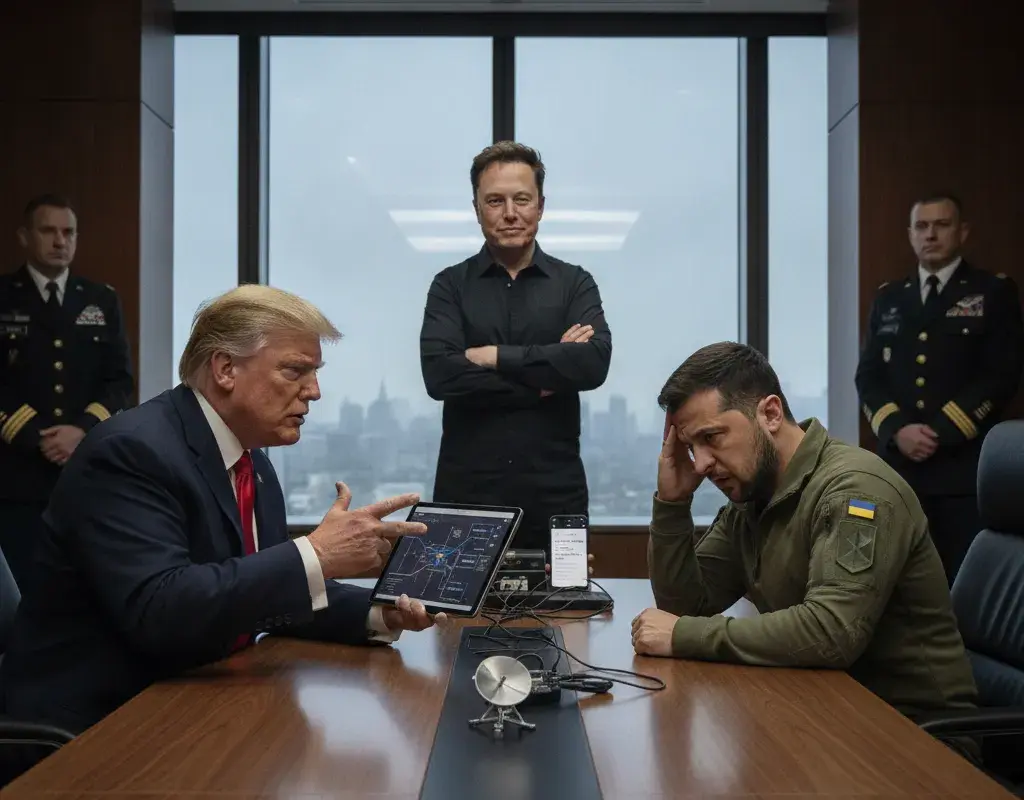
Relations between Washington and Kyiv have plummeted to their lowest point in months following a chaotic dispute over the functioning of Starshield, the military grade satellite system provided by Elon Musk. Ukrainian generals expressed shock after discovering sudden limitations on the system’s speed and connectivity, which crippled the operation of drones, aircraft, and essential communications during critical battlefield maneuvers. While Musk claimed via social media that any restrictions were mandated by the U.S. military and the presidency, conflicting reports from within the White House suggest a murky chain of command, leaving Ukraine convinced that the degradation was a deliberate political act rather than a technical glitch.
This digital friction comes amid a broader breakdown in trust fueled by President Donald Trump’s focus on domestic energy prices ahead of upcoming midterms. Tensions spiked after Trump pursued a controversial deal to purchase diesel from Russia, while simultaneously threatening to cut off intelligence sharing if Ukraine continued striking Russian oil refineries. The situation turned dire when Ukraine adhered to a tentative ceasefire on energy sites, only to be met with devastating Russian strikes that plunged hundreds of thousands of citizens into darkness without the customary early warnings from U.S. intelligence.
President Volodymyr Zelensky has reacted with visible frustration, declaring that his patience has run out as he resumes attacks on Russian energy infrastructure. He pointedly questioned the morality of conducting business with an aggressor state while Ukrainian soldiers continue to die on the front lines. With civilian areas under constant threat and supplies of Patriot missiles depleted, Zelensky argues that Washington is prioritizing short term economic gains and personal political alliances over the survival of a sovereign ally.
The escalating crisis highlights a precarious shift in American foreign policy, where the whims of both a volatile president and the world’s richest man now dictate the tactical capabilities of a national army. As Trump describes Zelensky as more difficult to handle than Vladimir Putin, observers in Europe fear that the United States is moving beyond mere neutrality toward actions that actively benefit Moscow. For those living under fire in Kyiv, these diplomatic spats are not merely political theater but life or death matters reflected in every missed warning siren.