

Google is significantly widening its safety net by expanding its Android earthquake alerts system to over 200 regions worldwide. This massive rollout more than doubles the previous coverage area of 98 regions, bringing critical early warning capabilities to many new territories including Guatemala and Panama. By utilizing the built-in accelerometers in millions of smartphones, Google can detect the initial waves of an earthquake and send notifications to users moments before the most destructive shaking hits.
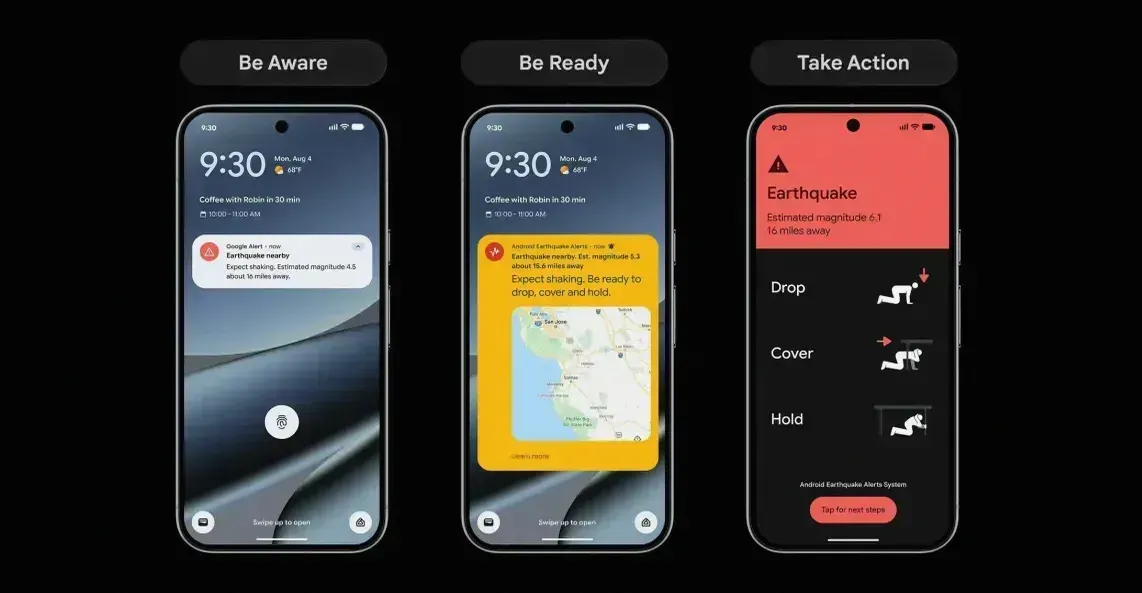
Since its debut in 2021, the system has already dispatched over a billion alerts. While the technology hasn’t been without a few teething problems, Google maintains that these split second warnings have played a genuine role in saving lives. The company is now focusing on making those messages more useful during high stress situations through a redesigned tiered notification system categorized as Be Aware, Be Ready, and Take Action depending on the severity of the tremor.
The most significant improvements are arriving within the Be Ready phase, which serves as a bridge between minor tremors and major events. Users will soon receive much more granular data when they enter this stage, including an estimated magnitude of the quake and a visual map showing the detection radius around the epicenter. These enhancements aim to give people better context about what they are experiencing and clear guidance on how to react safely.
As part of this ongoing effort to improve emergency response, Google plans to integrate buttons that allow users to access real time information as official reports come in following an event. By turning billions of devices into a makeshift global seismic network, the tech giant continues to push toward a future where smartphone hardware acts as a primary tool for disaster mitigation and public safety globally.