
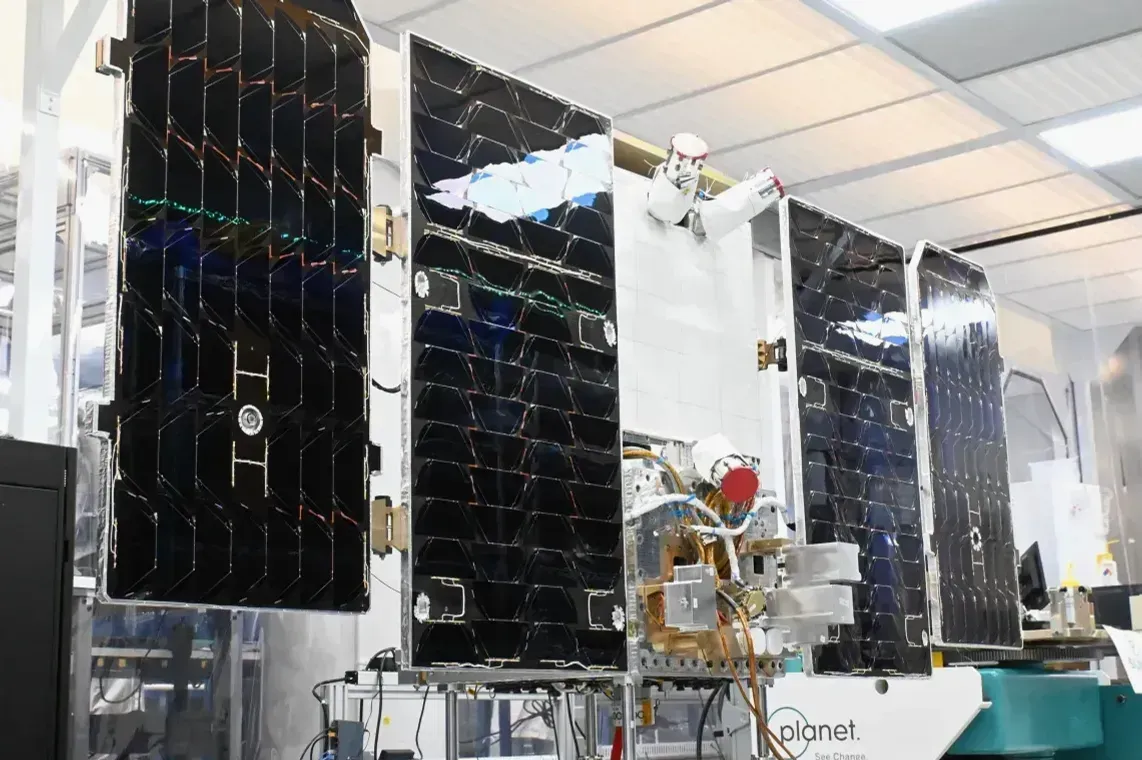
Google has officially moved its computing ambitions beyond the atmosphere with the successful activation of Suncatcher, a prototype space data center currently orbiting Earth. Launched earlier this month aboard a SpaceX Falcon 9 rocket, the satellite serves as a daring experiment in offloading massive artificial intelligence workloads to space. To celebrate the milestone, engineers prompted the onboard Gemma 4 model to compose a haiku about its own existence. The result was a poetic reflection on the blue marble below and starlight feeding its digital core, signaling that the hardware is functioning as intended.
Despite the lyrical success, the mission faces significant technical hurdles. While the satellite carries four Google Tensor Processing Units, extreme power constraints mean only one chip can run for roughly twenty minutes at a time. Beyond energy limits, Google is using Suncatcher to study how cosmic radiation affects high-end processors. On Earth, scientists used particle accelerators to simulate these conditions, but actual orbit provides a real-world test for bit flips—random errors caused by radiation that can corrupt data without alerting standard monitoring systems.
This venture represents a long-term bet on the future of planetary infrastructure. If this prototype proves resilient against thermal stress and radiation, Google plans to launch additional satellites by 2027 featuring enhanced power generation and laser communication links. Unlike some competitors who view satellites as isolated processing units, Google envisions a cohesive network of close-flying spacecraft working together to handle complex tasks. It is an ambitious architecture designed for efficiency in the 2030s rather than immediate profit.
The success of this lunar-style moonshot is deeply intertwined with the evolution of SpaceX’s Starship rocket, which will be necessary to deploy larger constellations economically. However, while Google looks toward the stars, it remains grounded by earthly financial pressures. Even as Suncatcher writes poetry in vacuum, Alphabet continues to navigate volatile markets where integrating AI into search engines has created friction with traditional advertising revenues. For now, however, Suncatcher stands as a lonelyly sentinel of silicon and code, proving that deep learning can survive and thrive in the silence of space.