

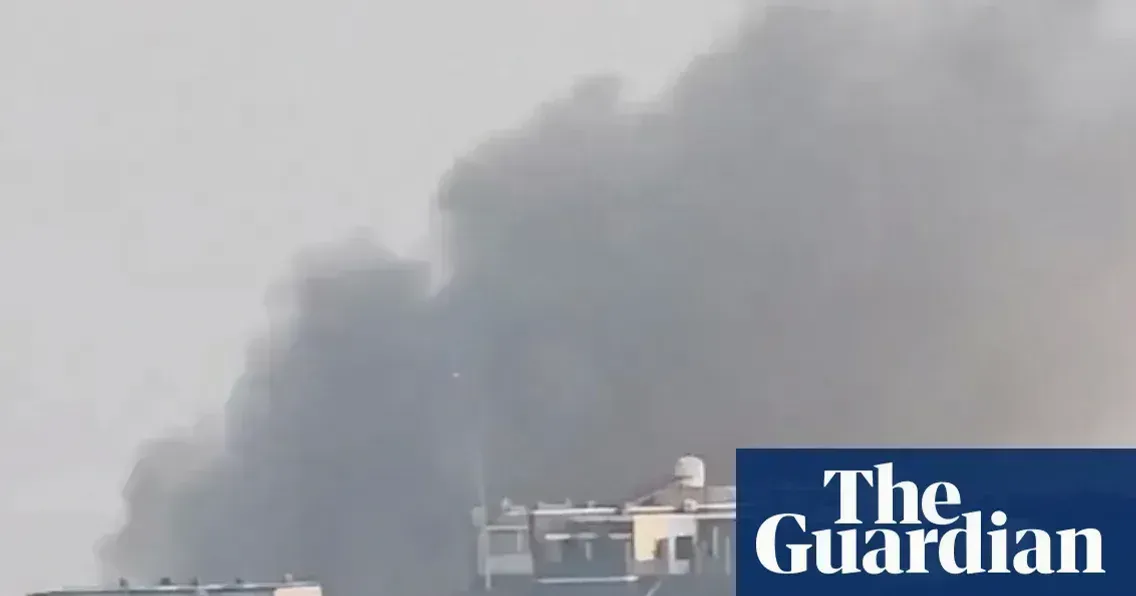
A wave of missiles and drones struck the Al Maashiq presidential palace complex in Aden on Thursday, marking the first time the seat of Yemen’s internationally recognized government has been targeted during the current phase of the conflict. Health Minister Qasim Buhaibeh confirmed that five people were killed and sixteen others wounded in the assault, noting that the victims included both security guards and civilian staff. While Prime Minister Shaya al Zindani and other high ranking cabinet members escaped unharmed, witnesses described hearing massive explosions echoing through the southern city.
Houthi military spokesperson Yahya Saree claimed responsibility for the operation, stating that his fighters specifically targeted a Saudi military operations headquarters within the palace grounds. This assertion was partially supported by an anonymous government official who told reporters that three missiles hit a command center while another two struck coalition force headquarters. These strikes appear to be part of a broader strategy by the Iran aligned rebels to target Saudi reinforcements regardless of their location, signaling a dangerous shift in the intensity of regional hostilities.
This latest attack comes amid a surge of violence extending far beyond Yemen’s borders, with Saudi Arabia reporting dozens of Houthi strikes on critical infrastructure in recent weeks. From hits on Saudi Aramco headquarters to repeated attempts to disable Riyadh’s international airport, these actions have disrupted thousands of flights and shaken global energy markets. The UN Security Council responded swiftly on Thursday, issuing a joint statement that condemned these reckless acts as escalatory behavior that threatens both regional stability and commercial shipping lanes in the Red Sea.
Back inside Yemen, this renewed aggression is reviving memories of a brutal civil war after several years of fragile peace. Aid agencies are sounding alarms over rapidly deteriorating humanitarian conditions, particularly in besieged areas like Taiz where basic necessities are dwindling. As geopolitical tensions involving Iran, Israel, and the United States bleed into local conflicts, civilians once again find themselves caught in the crossfire of a widening proxy battle that shows few signs of slowing down.