
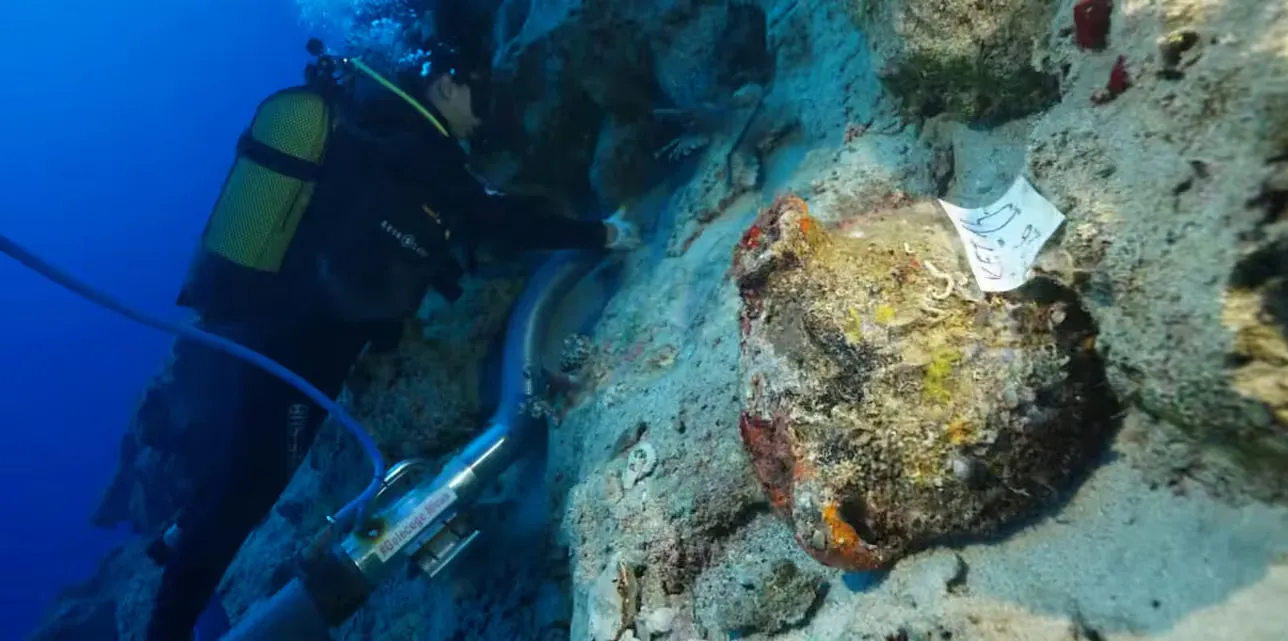
Archaeologists believe they have discovered the oldest shipwreck in the world off the coast of Turkey, potentially pushing back the timeline of organized maritime commerce by centuries. Located in the shallow waters near Kekova, west of Antalya, the site provides a rare glimpse into the Early Bronze Age. While the wooden hull has long since vanished due to underwater exposure, researchers have recovered a treasure trove of pottery that suggests the vessel dates back to between 2700 and 2400 BCE. If these findings are confirmed through peer review, this wreck predates the previous record holder off the coast of Greece by roughly three hundred years.
The discovery was spearheaded by Associate Professor Hakan Oniz of Akdeniz University, who acted on tips from local seafarers to locate the debris field wedged between two islands. Experts suggest the ship likely sought shelter from a violent storm before crashing against the rocky shoreline. Though the timber is gone, divers spent months meticulously extracting ceramic storage jars from thick layers of barnacles. These vessels, characterized by their flat bases and distinct clay belts, serve as archaeological fingerprints that allow scientists to trace where the goods came from and when they were manufactured.
These artifacts act as a time capsule from an era coinciding with the building of the Great Pyramids at Giza. At a time when historians had limited data on Mediterranean shipping, this find suggests a sophisticated web of international trade existed far earlier than previously thought. Preliminary analysis indicates some of the jars may have originated in the Central Jordan Valley and might have carried luxury commodities such as olive oil, wine, or tree resins. Such shipments mirror descriptions found in ancient Egyptian texts regarding imports brought into ports like Byblos in Lebanon.
As research continues and chemical analyses are conducted on residue remaining inside the jars, scholars hope to map out more precisely how these early mariners navigated the eastern Mediterranean. The Kekova wreck represents a missing link in our understanding of how resources like silver and cedar moved across borders thousands of years ago. Given that southern Turkey’s coastline remains dotted with undiscovered ruins, experts believe this is only one piece of a much larger puzzle waiting to be solved beneath the waves.