
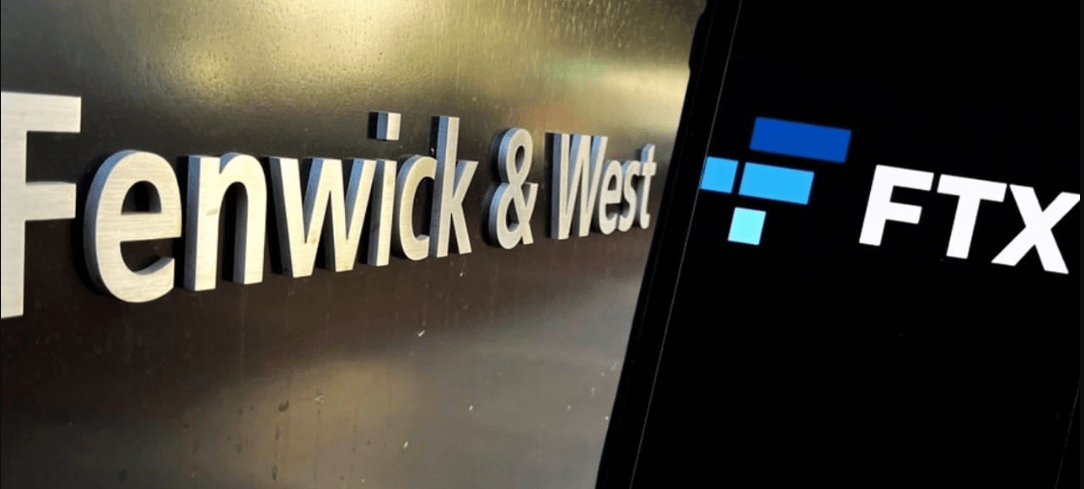
Why Is Fenwick Settling FTX Customer Claims?
Fenwick & West, the Silicon Valley law firm that served as FTX US’s main outside counsel before the exchange collapsed in 2022, has agreed to pay $54 million to settle customer claims alleging that the firm helped enable Sam Bankman-Fried’s fraud.
The settlement was filed in federal court in Miami before U.S. District Judge K. Michael Moore and forms the largest part of a second wave of FTX class-action settlements. Auditor Prager Metis agreed to pay $11.75 million, while former NBA player and FTX promoter Udonis Haslem agreed to pay $420,000.
Customer lawyers alleged in the filing that Fenwick “helped to craft and implement strategies that facilitated FTX’s fraud.” Fenwick rejected the allegation, saying it “was not aware of the fraud at FTX, stands by the integrity of its legal work, and disputes wrongdoing of any kind.”
The agreement does not amount to an admission of liability. It gives plaintiffs another recovery channel while allowing Fenwick to reduce exposure in one of the civil cases linked to FTX’s failure. The deal still needs preliminary approval from the court before it can move forward.
How Does This Fit Into The Wider FTX Litigation?
The new filing adds Fenwick, Prager Metis, and Haslem to an earlier group of 15 defendants that reached class settlements preliminarily approved in stages between December 2024 and July 2025.
That first group included Bankman-Fried, former Alameda Research chief Caroline Ellison, former FTX engineering chief Nishad Singh, co-founder Gary Wang, former Fenwick partner Dan Friedberg, and 10 celebrity promoters. Friedberg later served as FTX’s chief compliance officer.
The plaintiffs are asking the court to certify a single class covering anyone who held crypto or fiat on FTX, enrolled in a yield product, or bought FTT, the exchange’s token. FTX reported more than 1.2 million users at its peak, while the filing says the proposed class is “in the millions.”
The case is part of the post-collapse litigation map that has targeted not only FTX insiders but also outside advisers, auditors, law firms, and promoters. The central claim is that professional gatekeepers and public endorsers helped give FTX credibility before customer funds were found to be missing.
Investor Takeaway
The Fenwick deal shows that FTX-related liability is still moving beyond the exchange’s former executives. For crypto firms, the case keeps legal, audit, and promotion risk in focus, especially where outside advisers are tied to products that later fail.
How Would Customers Be Paid?
Plaintiffs want to replace the FTX bankruptcy estate as the entity responsible for distributing customers’ share of the settlements. They are asking the court to appoint JND Legal Administration, citing cost and efficiency concerns. JND ran a similar process for a recent Ripple Labs class settlement.
The proposed allocation plan is designed to avoid double recovery. It would subtract whatever each customer is recovering through the FTX bankruptcy process from the value of their lost crypto and fiat. Crypto losses would be valued using CoinGecko prices on May 14, while FTT would be credited only at the documented purchase price. Any FTT received for free would be valued at zero.
The distribution method matters because the FTX bankruptcy estate has separately returned more than $5 billion to creditors and has pledged to make most customers more than whole on a dollar basis. The class settlement process is therefore not a simple replacement for bankruptcy recoveries. It is an added legal track that has to account for what customers already receive from the estate.
Not all investors accept that approach. A group of 18 individuals and 3 corporate plaintiffs from Hong Kong, Singapore, the UK, the EU, and South Korea, who claim more than $500 million in losses, are pursuing their own lawsuit. They have asked the judge not to enter orders that would sweep in their claims before he rules on a separate motion they filed earlier this year.
What Risk Still Remains For Fenwick?
Fenwick’s $54 million settlement does not resolve all claims against the firm. It still faces a separate $525 million civil suit in Washington, D.C., brought by 20 FTX victims against the firm, several current and former Fenwick attorneys, and other defendants. That case alleges malpractice, fraud, and gross negligence and is not covered by the Miami settlement.
The unresolved Washington case keeps Fenwick exposed even if the Miami deal receives court approval. It also means the settlement should be read as a partial legal resolution rather than a full close to the firm’s FTX-related litigation.
The Fenwick deal also differs from the lawsuit brought against Sullivan & Cromwell, FTX’s bankruptcy counsel. Investors voluntarily dropped that case in October 2024 after the court-appointed bankruptcy examiner concluded that Sullivan & Cromwell was not complicit in the FTX fraud.
The new settlement comes more than 3 years after FTX collapsed in November 2022. Bankman-Fried is serving 25 years in federal prison after being convicted of stealing roughly $8 billion from customers and is appealing his conviction.
Judge Moore must still grant preliminary approval before the second-wave settlements can take effect. Plaintiffs are asking for a final approval hearing 90 days after preliminary approval. Until then, the Fenwick agreement remains a proposed settlement in a wider FTX recovery process that continues to test the liability of advisers, auditors, promoters, and other firms connected to the exchange.